
What Makes a Porta Potty ADA Compliant?
An ADA accessible porta potty isn't just a bigger box. It has to meet real measurements. ADA Standards section 404.2.3 sets a minimum clear door opening of 32 inches, wide enough for a wheelchair to pass through without a fight. Inside, ADA Standards section 304.3.1 calls for a 60 inch turning circle so a wheelchair user can rotate and reposition. The approach matters too: ADA Standards section 403.5.1 requires a 36 inch clear route leading up to the unit, and ADA Standards section 302.1 says that route and the floor inside must be stable, firm and slip resistant. Gravel that shifts underfoot or a muddy path from the parking area doesn't pass. Grab bars, lowered paper dispensers and door hardware also have to sit within reach. ADA Standards section 308.2.1 limits forward reach to 48 inches high and 15 inches low, and section 309.4 requires that door latches and any operable parts work with one hand, no pinching or twisting, and no more than 5 pounds of force. That's a lot to check on a single unit, which is why Kent job sites and event planners usually just order the ADA accessible porta potty line instead of trying to retrofit a standard porta potty rental.
How Many ADA Units Does a Kent Job Site Need?
Start with your total toilet count, then apply the 5 percent rule. If you're renting 20 standard units for a construction crew in Kent, that means at least one accessible unit on top of the ratio required by OSHA portable toilet requirements, which is governed separately by OSHA 1926.51(c)(1): one toilet facility for 20 workers or fewer, then one toilet seat and one urinal per 40 workers as crews grow past that. Never fewer than one accessible unit, even if your total count is small. Use our how many porta potties do i need guide to run the math for your crew size, then check placement against our porta potty placement guide so the accessible route doesn't get blocked by equipment or fencing. For events, the same 5 percent floor applies, and organizers renting for a wedding or festival in Kent should read event restroom rental before finalizing a headcount. A restroom trailer rental with a built-in ADA stall can sometimes satisfy the ratio more cleanly than scattering separate standalone units.
Do Portable Restroom Trailers Have Different ADA Rules?
Restroom trailers follow the same core standards as standalone units, just applied to a bigger structure. A 4 stall restroom trailer or 8 stall restroom trailer needs at least one ADA-compliant stall meeting the same 32 inch door and 60 inch turning circle specs, plus a ramp if the trailer sits above grade. ADA Standards section 405.2 caps ramp slope at 1:12, so a trailer with a foot of rise needs at least 12 feet of ramp length. That's a real constraint on tight urban lots in Kent, where a loading dock or narrow driveway can eliminate a site from consideration entirely. A 2 stall restroom trailer is more forgiving on space but still has to meet the same door and clearance rules if it's marketed as accessible. Before booking, check the site plan against our restroom trailer rental cost page and confirm ramp footprint with our crew. Luxury builds under luxury restroom trailer sometimes need custom ramp configurations depending on ground slope at the delivery point.
Where Should ADA Units Be Placed on Site?
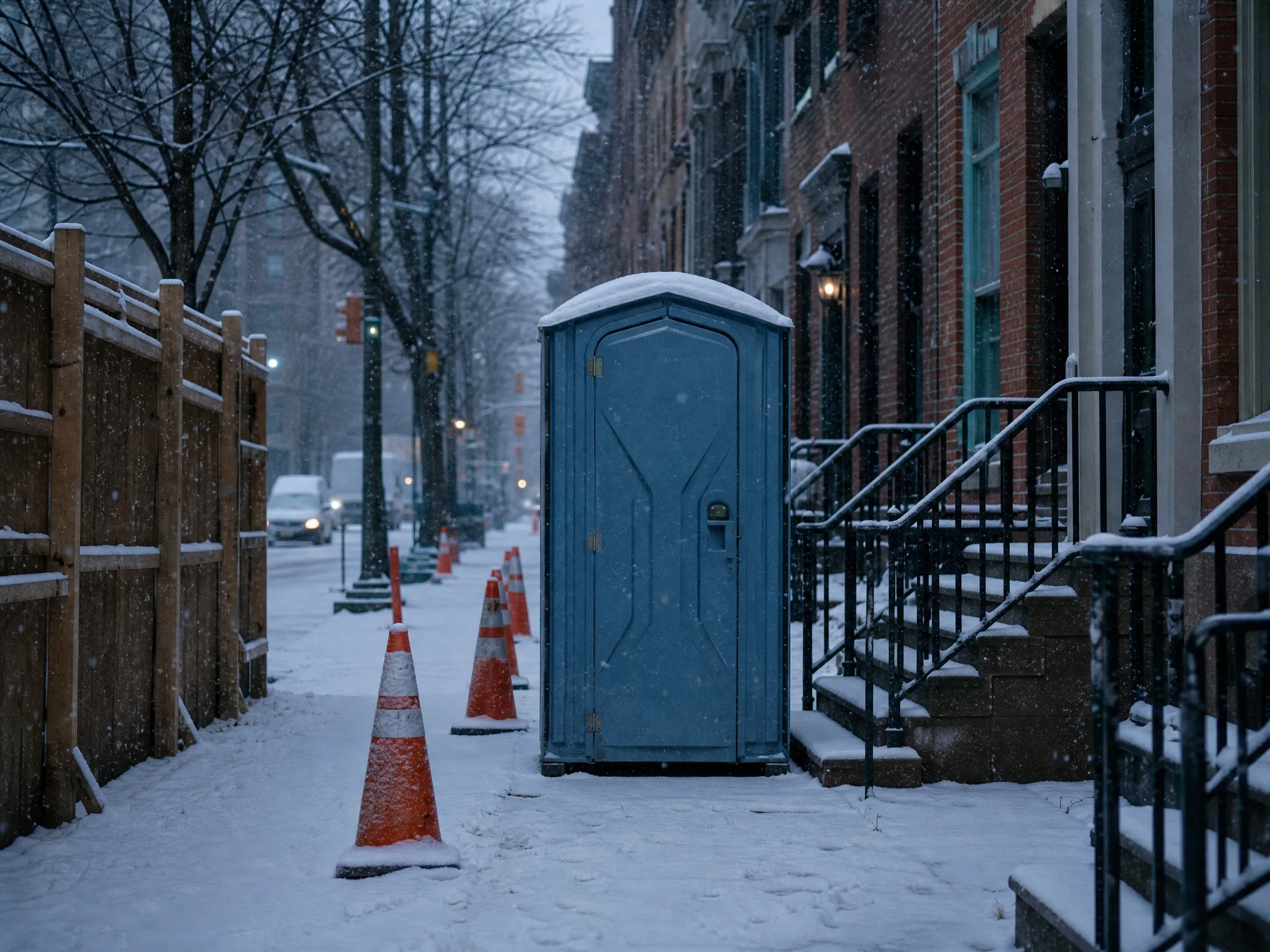
Placement determines whether an accessible unit actually functions as one. The approach path has to stay clear at the full 36 inch width required by ADA Standards section 403.5.1, from the accessible parking area or drop-off point all the way to the door. That means no stacked pallets, no hose reels, no fence panels leaning against the route. On construction sites this gets planned alongside temporary fence rental layouts so barrier lines don't cut across the accessible path. Ground conditions matter as much as width. A gravel lot that's fine for foot traffic can still fail ADA Standards section 302.1's firm-and-stable requirement if it's loose enough to catch a wheel. Kent's wetter months make this a real issue on unpaved lots. We'll walk the site with you and flag any ground prep needed before delivery. For agricultural operations, note that field sanitation for hand-labor crews falls under OSHA 1928.110 rather than the construction standard, with a facility required within a quarter mile walk. See farm and agricultural restrooms for that setup, or porta potty rental checklist for a full pre-delivery list covering both ADA and general placement.
Is an ADA porta potty more expensive to rent?
Yes, modestly. ADA units typically run in a higher band than standard units for the same rental length, since they carry more hardware and a bigger footprint. Check porta potty rental cost for current pricing across unit types before you order for a Kent site.
Can I mix ADA and standard units on the same order?
Yes, that's the normal setup. Most Kent orders combine several standard porta potty rental units with one or two accessible units to hit the 5 percent minimum under ADA Standards section 213.2 without over-ordering.
Does a small residential job need an ADA unit?
Usually not required for private residential work with no public access. A home renovation porta potty for a single crew rarely triggers ADA obligations, but public-facing events always do.
Do restroom trailers need a ramp even on flat ground?
Often yes, since most trailers sit above ground level by design. Confirm ramp length against ADA Standards section 405.2's 1:12 slope limit when you book a restroom trailer rental in Kent.
What happens if my site can't meet the accessible route width?
Talk to us before delivery. We can sometimes reposition units or adjust the porta potty placement guide layout to clear the required 36 inch path rather than failing inspection on-site.
Next step
Get a delivery date
Tell us the address, the dates and the headcount. We size the order and confirm the route.