
How many restrooms does a county fair need?
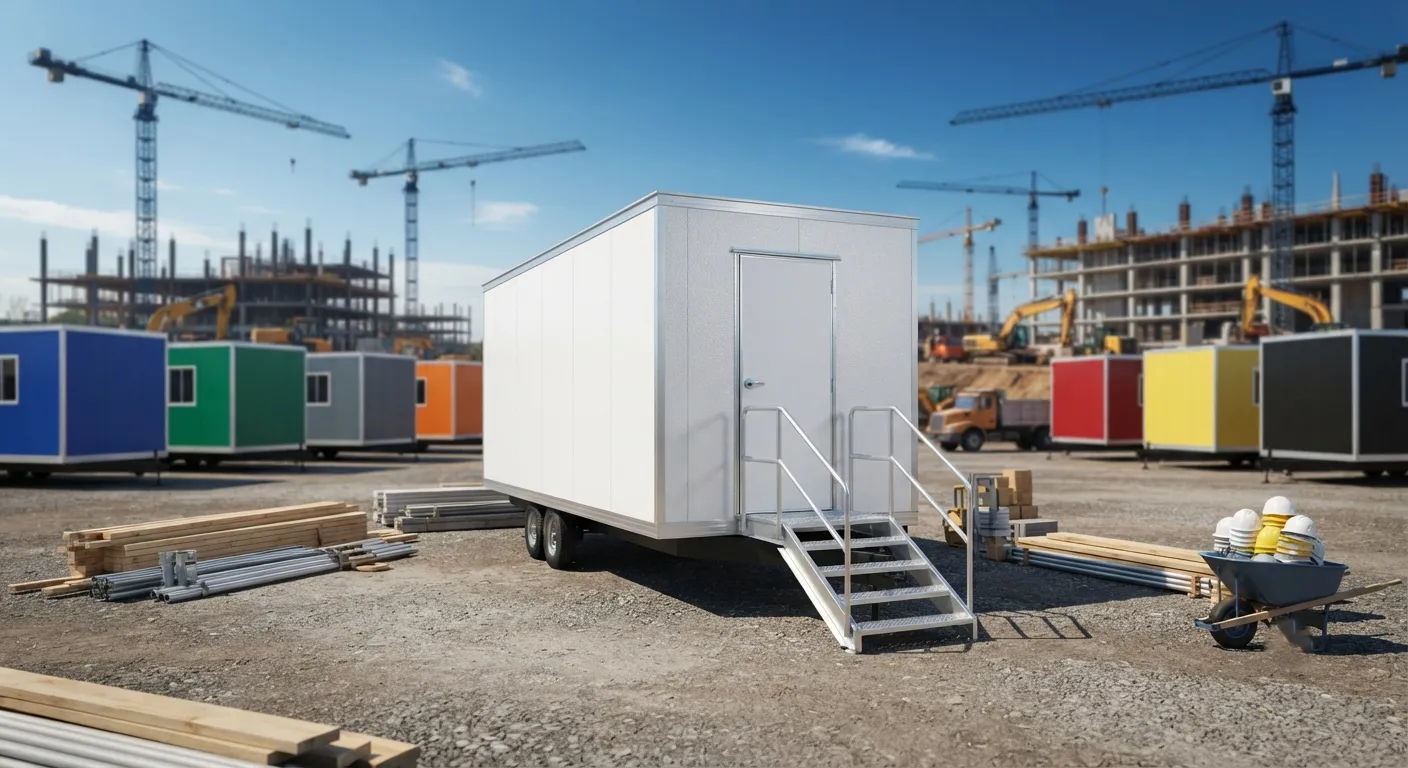
Fair attendance spikes hard around midday and again in the evening, so the math has to use your busiest hour, not your daily total. Kent Porta Pros starts with how many porta potties do I need as the baseline worksheet, then adjusts up for food vendors, beer gardens and grandstand seating, all of which pull crowds toward one spot at once. A fairground layout usually works best in restroom clusters near each major draw, not one bank at the entrance. Under ADA Standards section 213.2, where single-user portable units are clustered, at least 5 percent of that cluster has to be accessible, and never fewer than one unit. That means a cluster of ten standard units needs at least one ADA accessible porta potty sitting inside it, not off to the side. We typically mix standard porta potty rental units with a few deluxe flushable porta potty stations near VIP or sponsor areas, since fair boards often want a nicer option for paying guests. For fairs running a full weekend, a restroom trailer rental placed near the grandstand handles overflow better than adding more single units, and an 8 stall restroom trailer can absorb a big chunk of grandstand traffic on its own.
What does it cost to rent restrooms for a county fair?
Fair pricing runs on an event-day basis rather than a weekly rate, since most fairs book Kent Porta Pros for a defined run of consecutive days. Standard event pricing for portable restrooms falls in the 200 to 800 dollar range depending on unit count, cluster spacing and service frequency across the fair's run. Trailers rented for a full event, such as a three or four day county fair, run in the 2,499 to 3,899 dollar range for the event, which covers stall count, generator needs and daily servicing.
| unit | duration | typical price |
|---|---|---|
| standard | event | $400 |
| ada | day | $230 |
| trailer | event | $3,500 |
| service_fee | day | $175 |
Check porta potty rental cost for the full breakdown, or restroom trailer rental cost if the fair board is weighing trailers against a bigger bank of standard units. Delivery to a fairground in Kent typically adds a delivery fee on top of the unit price, and that fee scales with distance and how many trips the crew makes to reposition units mid-event. A quote through request a quote will break out delivery, service and unit cost separately so the fair committee can see where the money goes.
Why does servicing matter more at a fair than a normal job site?
A fair concentrates thousands of uses into a single unit over a few hours, far past what ANSI/PSAI Z4.3 assumes as a baseline service interval of once per week for up to 10 users over a 40 hour week. That standard was built for a slow-turnover job site, not a fairground gate. Kent Porta Pros services fair clusters at least once daily during multi-day events, sometimes twice near food courts and beer gardens where traffic is heaviest. Each standard unit carries a 60 to 70 gallon holding tank, and a unit sitting near a funnel cake stand or a beer tent fills faster than one tucked behind the livestock barn. Under OSHA 1926.51(c), a single toilet facility covers up to 20 workers on a construction crew, but fairgrounds serve the public, not a fixed crew, so counts need to be built around gate traffic instead. Placement also matters: units need to sit on stable, firm, slip resistant ground per ADA Standards section 302.1, which rules out soft grass or gravel that shifts under a queue. A hand-washing bank near food vendors matters too, since handwashing station rental units satisfy 29 CFR 1910.141(d)(2), which requires soap and towels or a hand-drying device, not just sanitizer. Fair organizers in Kent often pair restroom clusters with temporary fence rental to route queue lines and keep foot traffic off staging areas.
Fairgrounds in Kent sit close enough to Covington, 6.8 miles east, and Des Moines, 7.2 miles west, that some vendors serve both events in the same season, and Kent Porta Pros can plan delivery routes around back-to-back bookings. If your event needs waste hauling alongside restrooms, a roll-off dumpster rental placed near vendor row keeps trash off the midway.
How far in advance should we book restrooms for a county fair?
Book as soon as your date and vendor count are set, ideally three to four months out for a multi-day fair. Fair season books fast across Kent and nearby cities, and trailer availability tightens first. Early booking also gives time to walk the site and finalize porta potty placement guide decisions.
Do we need an ADA unit even if we don't expect disabled visitors?
Yes. ADA Standards section 213.2 requires at least one accessible unit per cluster regardless of expected turnout, and a 60 inch turning circle under section 304.3.1 has to be clear in front of it. See ADA restroom requirements for full placement rules.
Can we get a portable sink or handwashing station near the food vendors?
Yes, and it's worth doing. A portable sink rental or dedicated handwashing station rental placed near food booths meets 29 CFR 1910.141(d)(2), which requires soap and a drying method, not sanitizer alone.
What happens if a unit needs emergency service mid-fair?
Kent Porta Pros dispatches an emergency porta potty rental swap or same-day pump-out during fair hours. Fairgrounds get priority routing during multi-day events since foot traffic doesn't stop for a full tank.
Should we rent a restroom trailer instead of standard units?
Depends on budget and guest expectations. A trailer suits grandstand areas or VIP sections, while standard clusters cover the midway cheaper per user. Many Kent fairs mix both, using 4 stall restroom trailer units near seating and standard units elsewhere.
Next step
Get a delivery date
Tell us the address, the dates and the headcount. We size the order and confirm the route.