
How Many Restrooms Does a Farm Need?
OSHA 1928.110 covers hand-labor operations in agriculture directly: potable water, a toilet, and a handwashing station for every 20 employees, and none of it more than a quarter mile from where people are working. That is stricter on distance than most construction rules, because field crews cannot walk far on a break. A standard porta potty rental meets the toilet requirement on its own; pair it with a proper handwashing setup and you are covered. Kent Porta Pros figures the count from your crew size and field layout, not a guess, and if the crew splits across two or three fields, each cluster gets its own unit rather than one bank of toilets a quarter mile from half the workers. Seasonal operations around Kent often start small during planting and scale up for harvest. That is fine. Add units as headcount grows and drop back down after. For bigger crews or multi-field operations, check the how many porta potties do I need guide, or just call and describe your layout. Ranches and larger operations sometimes run a portable restroom rental program that rotates units between fields on a set schedule instead of leaving one unit parked all season.
What Handwashing Setup Do Farms Need?
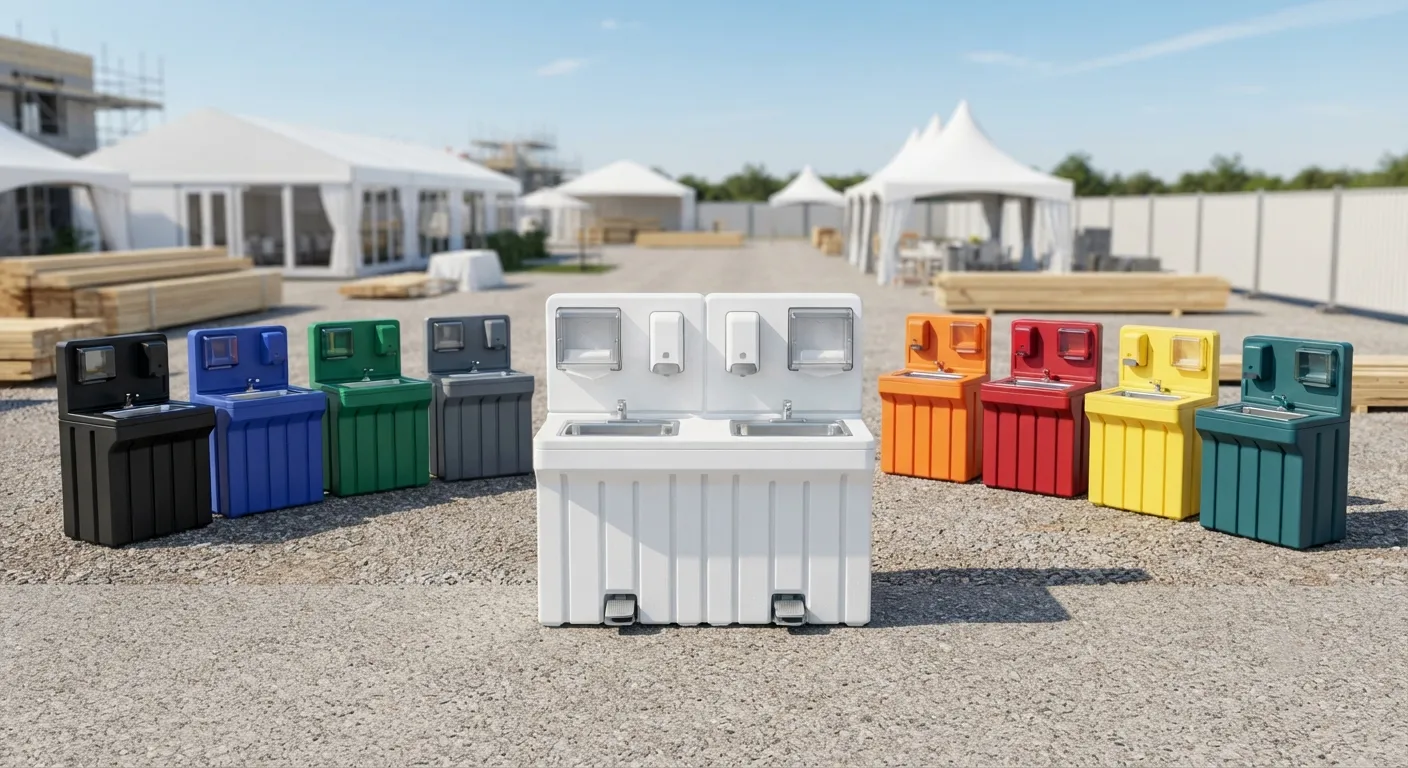
Soap and towels or a hand-drying device are required at the wash station under 29 CFR 1910.141(d)(2); hand sanitizer does not count as a substitute. That rule matters more on a farm than almost anywhere else, because sanitizer does nothing against dirt, chemical residue or the kind of grime field work produces. A handwashing station rental from Kent Porta Pros comes stocked with soap and paper towels, and if your crew is applying pesticides or herbicides, OSHA 1926.51(f)(1) requires washing facilities specifically for that contact, separate from general sanitation. That is a real distinction: general field handwashing is one obligation, and washing off after chemical application is another. Some operations also run a portable sink rental at the equipment shed or loading area, where crews handle produce or livestock feed and need to wash before and after, not just at break time. If you are unsure which setup applies to your operation, the handwashing station requirements page breaks down the difference between general sanitation and contaminant-specific washing. Kent Porta Pros can put stations at the field edge, the barn, or both.
Where Should Units Go on a Working Farm?
Units need firm, stable ground and a route a service truck can reach without getting stuck, and on most Kent-area farms that means gravel pads, field edges near an access road, or packed ground next to a barn rather than open, tilled soil. A standard unit sits at roughly 44 by 48 inches on the ground and stands about 92 inches tall, small enough to fit at a field corner without eating into working acreage. Service trucks need a clear approach, and on properties with long gravel drives or narrow farm lanes, tell Kent Porta Pros about gates, low branches or soft shoulders before delivery day so the route is confirmed in advance. Farms near Covington, about 6.8 miles east of Kent, and Des Moines, roughly 7.2 miles west, run into the same seasonal mud and dust issues, and placement on stable, well-drained ground solves most of it. If your property runs livestock and hand-labor crews together, you may also need a holding tank for wash-down water or runoff; see holding tank rental for that setup. Farms hosting u-pick events, corn mazes or fall festivals have different needs than day-to-day field crews; check county fair restrooms or festival restroom rental if the property doubles as an event venue during harvest season.
| duration | typical price |
|---|---|
| day | $150 |
| week | $200 |
| month | $200 |
Standard unit pricing above reflects the measured range for day, week and month rentals; a season-long placement usually runs on the monthly rate. See monthly porta potty rental for the full breakdown, or porta potty rental cost for how pricing shifts with duration and add-ons.
How often does servicing happen on a farm site?
Weekly service is the baseline for up to 10 users over a standard 40-hour week under ANSI/PSAI Z4.3. Larger crews or longer hours need more frequent pumping. Kent Porta Pros adjusts the schedule around planting and harvest peaks, when crew size and unit use both climb fast.
Can we move units between fields during the season?
Yes. Kent Porta Pros relocates units as crews shift fields, as long as the new site has stable ground and truck access. Tell us the rotation schedule up front so service visits track the units, not the last known location.
Do farms need an ADA-accessible unit?
If the public visits, such as u-pick or farm stand operations, ADA Standards section 213.2 requires at least one accessible unit in any cluster, even a cluster of just a few. See ADA accessible porta potty for specs and placement needs.
What if we also need dumpsters for crop waste or packaging?
Kent Porta Pros delivers roll-off dumpsters alongside restroom units on the same site visit. Check roll-off dumpster rental for sizing, or construction dumpster rental if you are also building barn structures.
Is a septic tank or holding tank a better fit for a farmhouse on the property?
Depends on use. A residential septic tank is typically pumped every 3 to 5 years depending on size and household count; see how often to pump a septic tank or septic pumping service for the farmhouse itself, separate from field units.
Next step
Get a delivery date
Tell us the address, the dates and the headcount. We size the order and confirm the route.